Solid Wood, MDF, or Engineered? The Science of Choosing the Right Interior Door Core
• September 4, 2026
Solid Wood, MDF, or Engineered? The Science of Choosing the Right Interior Door Core
As a woodworker and door manufacturer, I’ve spent decades studying how different wood species react to humidity, daily wear, and structural stress. Choosing the right interior door core isn't just a detail—it is one of the most critical structural decisions in a build.
When specifying doors for residential or commercial projects, architects, builders, and contractors often balance cost, dimensional stability, and performance. Here is an honest breakdown of the primary interior door core materials on the market today—and why core construction makes or breaks a door.
1. Hollow Core & Honeycomb Doors
Hollow core doors consist of an outer wooden frame with a lightweight cardboard honeycomb mesh inside, faced with thin hardboard or molded skin panels.
Pros: Extremely lightweight, low cost, easy to transport and hang.
Cons: Minimal impact resistance, zero acoustic insulation (typically STC 20–22), and easily damaged during construction or daily use.
Best Used For: Low-budget, non-sensitive spaces like temporary structures or basic storage closets.
2. MDF & Particleboard (MDP) Core Doors
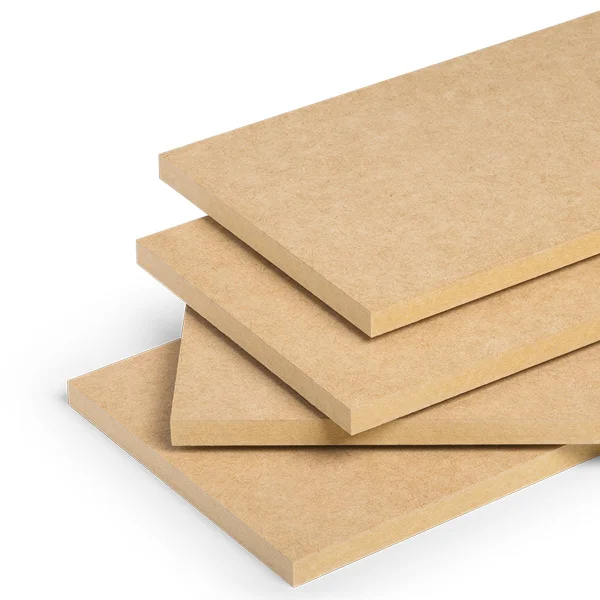
Medium-Density Fiberboard (MDF) and particleboard (MDP) doors use engineered wood fibers or wood chips bound with synthetic resins under heavy pressure.
Pros: Smooth, uniform surface ideal for painted finishes; higher density than hollow cores.
Cons: Heavy without offering true structural grain strength; highly susceptible to moisture expansion at the edges; lower screw-holding capacity over time.
Best Used For: Budget-conscious interior projects requiring painted surfaces in low-humidity environments.
3. Traditional Solid Lumber Doors
Constructed entirely from solid, single-piece timber slabs or thick stiles and rails.
Pros: Premium aesthetic weight and authentic grain beauty.
Cons: Prone to warping, twisting, and checking due to environmental humidity changes. Natural internal wood stresses make long-term dimensional stability difficult to maintain over large surfaces.
Engineered solid wood cores solve the age-old problem of natural timber warping while retaining the density and strength of real wood.
The manufacturing process involves milling natural timber into smaller strips or veneers, then laminating them together with opposing grain directions under intense hydraulic pressure using exterior-grade adhesives.
Why Grain Alternation Matters:
Self-Canceling Tension: By alternating the growth ring orientation of each laminated strip, the natural internal tension of the wood fibers neutralizes itself. If one section attempts to cup in one direction, the adjacent block counteracts it.
Dimensional Stability: The door remains flat across seasonal climate variations, preventing swelling, sticking, or latch misalignment.
High Acoustic & Mechanical Performance: Unlike hollow or composite cores, the dense mass of cross-laminated solid wood significantly dampens sound transmission (yielding superior STC ratings) and provides superior impact resistance.
Resource Efficiency: Cross-lamination utilizes high-grade timber yield with minimal waste, providing structural solid-wood mass with greater efficiency than whole-log yields.