As architects and interior designers, we spend hours perfecting floor plans, balancing lighting schemes, and selecting material palettes. Yet, one of the most tactile and frequently specified elements in residential design often gets overlooked until late in the process: interior doors and architectural millwork.
A door isn't merely an opening between spaces—it's a three-dimensional element that establishes the architectural cadence of a home. Choosing between a crisp Shaker profile and a soft, traditional Ovolo profile isn't just a matter of taste; it’s a decision that dictates shadow lines, light interplay, and historical context.
Let’s dive into the nuances of these two iconic profiles, how they are constructed, and how to specify the right profile for your next project.
How Profile Selection Impacts Overall Architectural Style
When selecting doors and custom cabinetry profiles for your project, consider the overarching architectural language.
The Shaker Profile: Clean Lines & Timeless Craftsmanship
Originating from the 18th-century Shaker community, this design philosophy prioritizes utility, honesty in joinery, and unadorned elegance. Today, Shaker doors remain a staple in both transitional and contemporary architecture.
True Shaker vs. Molded / Formed Shaker
Not all Shaker doors are created equal, and specifying the right type depends heavily on budget, durability requirements, and design intent:
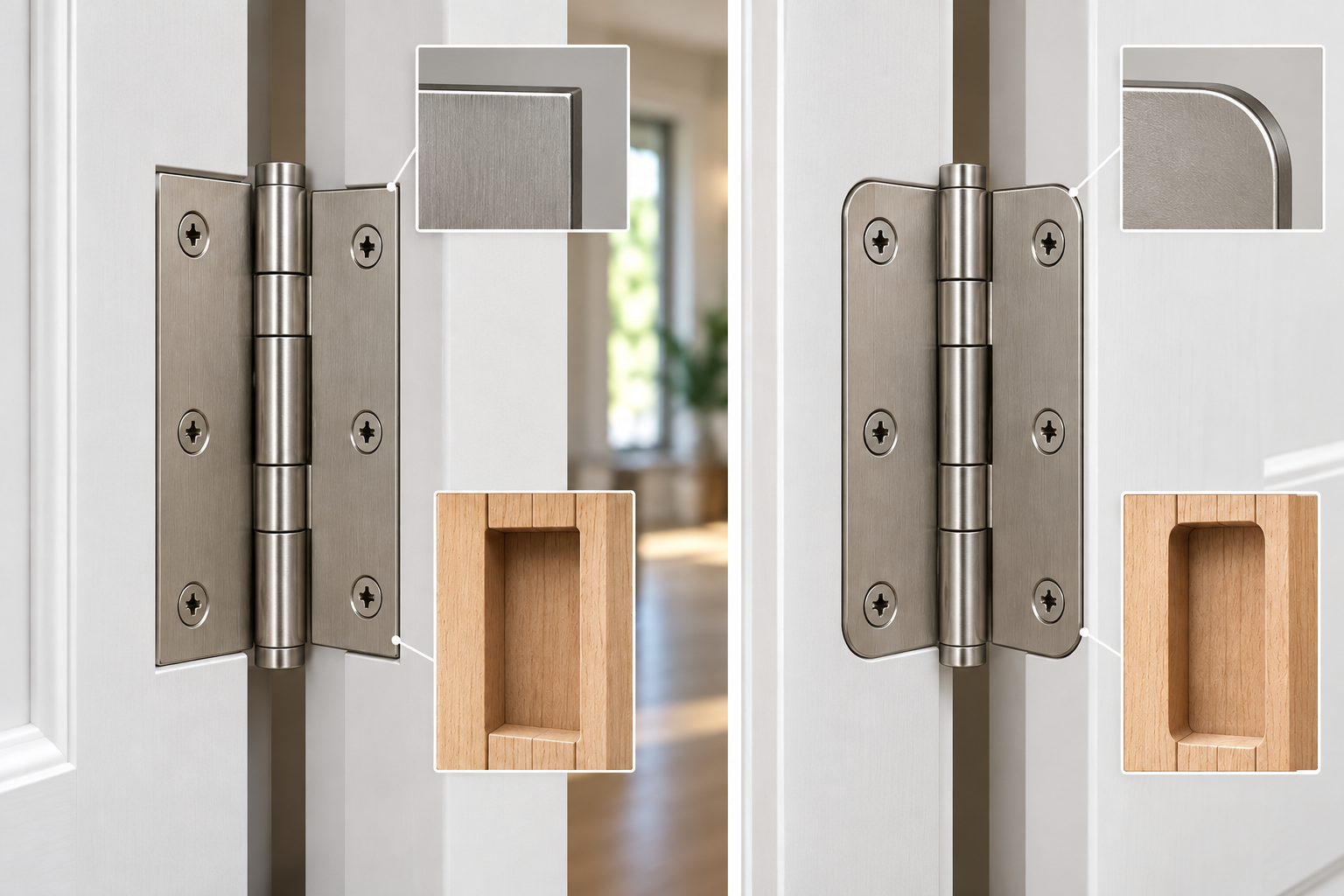
True Stile-and-Rail (Craftsmanship Shaker): Constructed using individual horizontal rails and vertical stiles surrounding a recessed flat center panel. This traditional method creates sharp, 90-degree internal corners, clean crisp shadow lines, and genuine joinery lines where the pieces meet. It embodies true millwork craftsmanship.
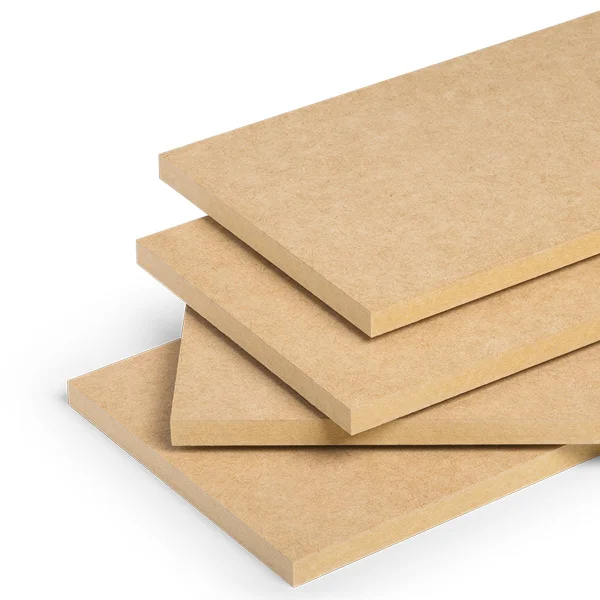
Molded / Formed Shaker: Manufactured using a single pressed skin (often high-density fiberboard) over a core. While cost-effective and dimensionally stable, formed Shaker doors feature slightly rounded inner corners due to the press-molding process. In high-end design, those soft inner corners are an immediate tell-tale sign of engineered mass production.
Panel Layout Variations
Shaker design goes far beyond the standard single-panel door. Depending on the vertical proportions and rhythm of the space, you can specify:
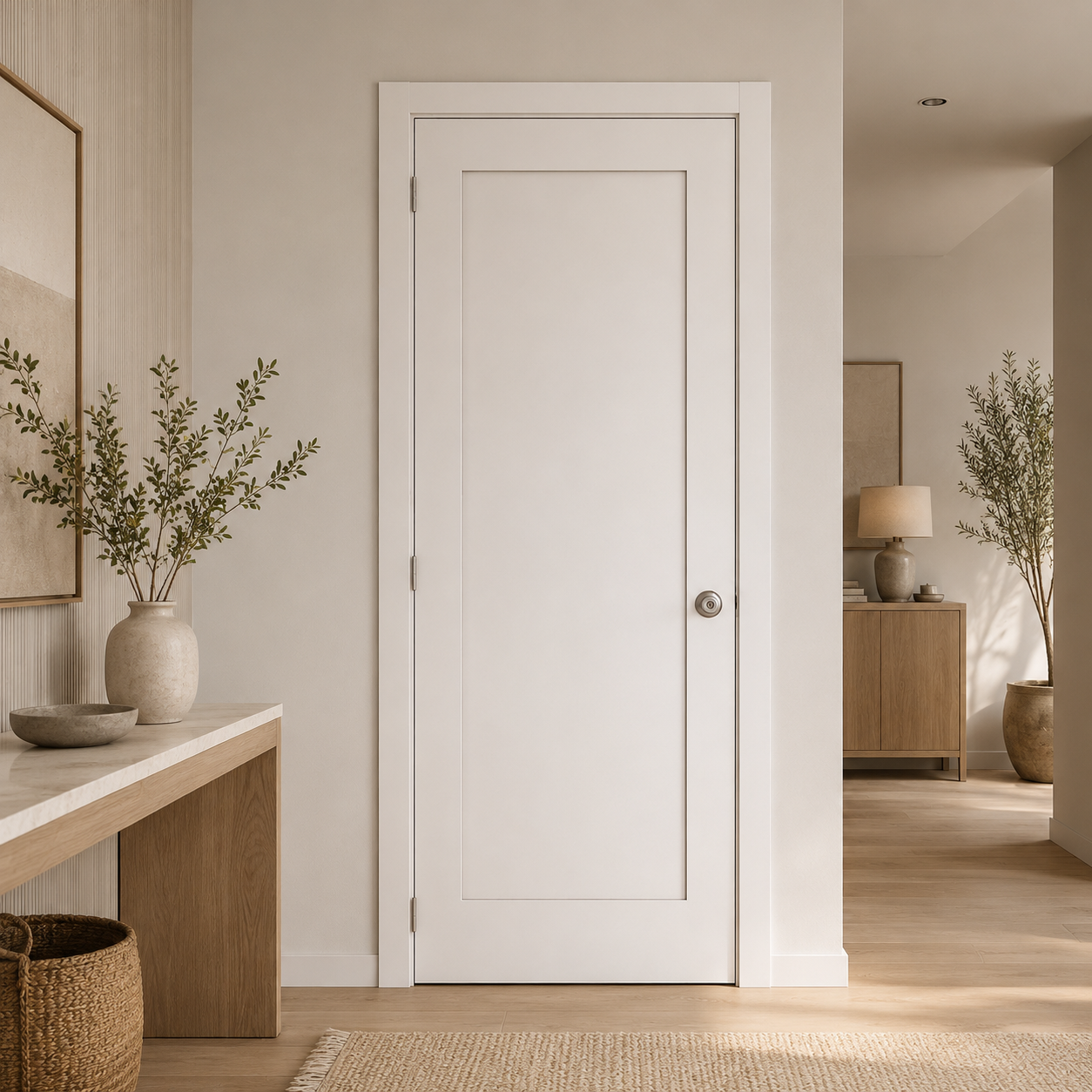
1-Panel (1P): Minimalist, bold, and modern. Great for contemporary residences.
2-Panel (2P): A versatile design, available as equal split or traditional top-heavy proportions.
3-Panel (3P & 3P-T Craftsman): Featuring three equal stacked panels or a top panel with two tall vertical panels below—a hallmark of Craftsman and American Bungalow architecture.
5-Panel (5P / Equal Panels): Excellent for adding vertical height perception in high-ceiling hallway corridors.
The Ovolo Profile: Traditional Elegance and Classic Depth
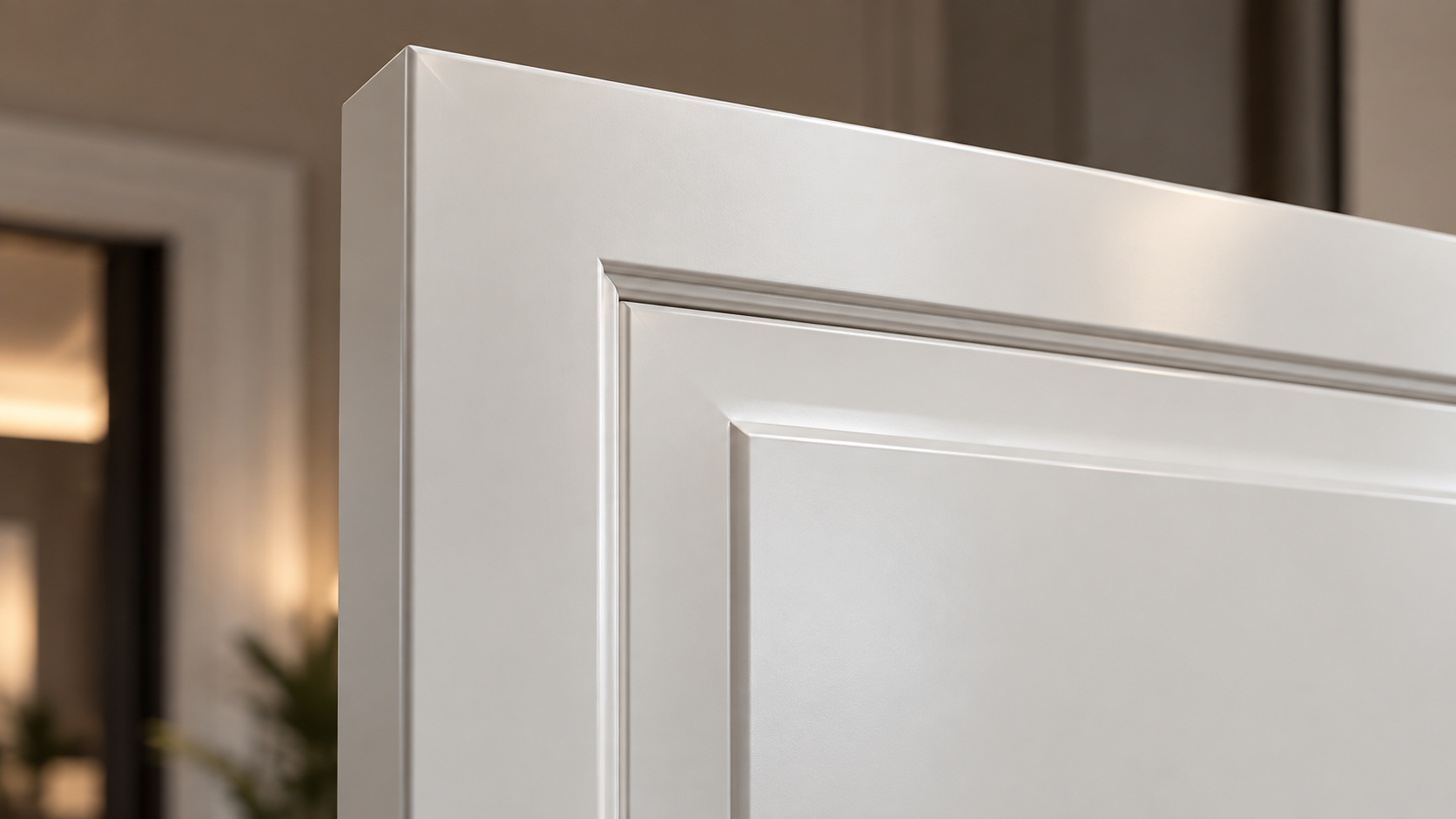
Derived from classical Greek and Roman architecture, the Ovolo profile (from the Latin ovum, meaning egg) features a convex, quarter-round molding profile. Unlike the stark 90-degree angle of a Shaker door, an Ovolo profile creates a smooth, curved transition from the stile/rail frame down to the panel face.
This continuous curved shadow line diffuses light gently across the door face, giving it a warmer, more traditional aesthetic typical of Colonial, Victorian, and Georgian interiors.
Single Hip vs. Double Hip Panels
When specifying Ovolo profile doors, the raised center panel, the raised panel, plays a crucial role in architectural depth:
Single Hip (Single Bevel):
Features a single tapered bevel sloping from the thick center panel down to the edge inserted into the frame.
Creates a refined, subtle transition that works beautifully in soft traditional or refined transitional spaces.
Double Hip (Double Bevel):
Incorporates an extra stepped shoulder or double bevel edge along the panel margin.
Adds significant architectural weight, pronounced shadow line layering, and high-end depth—making it ideal for historic renovations, classic 6-panel colonial configurations, and grand estate interiors.
Glass Lite Options (French Door Variations)
Both Shaker and Ovolo profiles adapt exceptionally well to glass inserts (divided lites/French doors):
Shaker Glass Doors: Feature clean-cut, square-edged muntin bars (mullions). Perfect for modern farmhouses, Scandinavian interiors, or modern offices where maximum light transmission and crisp geometry are key.
Ovolo Glass Doors: Feature classic contoured muntin bars with intricate quarter-round detailing. They pair effortlessly with leaded glass, bevelled glass, or traditional clear panes, making them the gold standard for traditional dining rooms, libraries, and formal entry foyers.
The Designer’s Takeaway
As designers, the beauty of a project lives in the details. The choice between a True Shaker and an Ovolo profile—or deciding between a Single Hip and Double Hip panel—isn't just a millwork specification. It defines how light reflects in a hallway, how a room feels when you transition through it, and how authentically the interior aligns with the architectural architecture of the home.
Next time you are putting together your door schedule, look beyond basic dimensions and core types. Specify the profile, choose the hip layout deliberate to the period, and elevate the craftsmanship of your space from the ground up.